
Programmatic SEO: How to Scale Content Without Losing Quality
Most websites grow their organic traffic one page at a time. Write a blog, optimize it, wait for rankings, repeat. That works fine when you have ten pages to build. It breaks down completely when your business has thousands of possible search queries to target, like every city you serve, every product variant you sell, or every job title you list.
This is exactly the problem programmatic SEO solves.
Done right, it lets you build hundreds or thousands of pages that each answer a real search query, without hiring an army of writers. Done wrong, it floods your site with thin, repetitive pages that Google quietly stops indexing. In this guide, we will break down what programmatic SEO actually is, how it works, real examples from companies you already know, and a practical framework to scale content without losing quality or getting penalized.
What Is Programmatic SEO?
Programmatic SEO is the practice of creating a large number of search optimized pages using a single template and a structured dataset, instead of writing each page by hand. One template holds the layout and the writing logic. A spreadsheet or database holds the data, such as city names, product names, prices, or job titles. When you combine the two, you get one unique page for every row of data.
For example, a single template for “[Service] in [City]” combined with a list of 50 cities can produce 50 individual, search ready pages in a fraction of the time it would take to write them one by one.
The goal of programmatic SEO is not to spam Google with variations of the same page. The goal is to capture long tail search demand, the thousands of specific queries that are too small individually to justify a dedicated writer, but add up to significant traffic when combined.
How Programmatic SEO Works
At a basic level, programmatic SEO runs on three parts working together.
1. A structured dataset
This is your source of truth. It could be a list of locations, product specifications, industry categories, or course names. The quality of this data decides the quality of your pages, so this step deserves as much attention as the writing itself.
2. A page template
The template defines what stays fixed on every page (navigation, trust signals, CTA) and what changes based on the data (headline, description, comparison numbers, FAQs). A good template is built so that swapping the data produces a genuinely different page, not the same paragraph with one word changed.
3. An automation or sync layer
This connects your dataset to your website so pages are generated, published, and updated automatically as the data changes. Depending on your website platform, this could be a CMS plugin, a no code automation tool, or a custom script.
When these three parts are built well, you end up with a content system rather than a content library. Update the data once, and every related page updates with it.
Real Examples of Programmatic SEO
Several companies you already use have built their organic growth on programmatic SEO.
- Zapier ranks for thousands of “[App A] + [App B] integration” pages, one for every combination of tools its platform connects.
- Airbnb generates location based pages for neighborhoods, cities, and property types, each targeting a specific local search query.
- Indeed creates job search pages for every combination of job title and city, capturing search intent that no single blog post could cover.
- Canva has thousands of “[X] template” pages, one for each design category and use case.
- Yelp builds category and location pages automatically from its business listing database.
None of these companies wrote each page manually. They built one strong template per page type and let their data do the rest. What makes these pages rank is that each one still answers a specific, real query with genuine information, not just a swapped keyword.
Programmatic SEO vs Traditional SEO
| Factor | Traditional SEO | Programmatic SEO |
|---|---|---|
| Page creation | Manual, one page at a time | Template plus data, generated at scale |
| Best suited for | Competitive head terms, in depth guides | Long tail, repeatable query patterns |
| Speed to publish | Slow, depends on writing capacity | Fast, limited mainly by data and QA |
| Content depth per page | High, fully custom | Moderate, standardized but should stay unique |
| Risk of thin content | Low if done well | High if templates are not designed carefully |
| Resource requirement | Writers and editors | Data, template design, and technical setup |
| Ideal for | Blogs, pillar pages, brand storytelling | Directories, marketplaces, service area pages, SaaS integrations |
Neither approach replaces the other. Most strong SEO strategies use traditional content for competitive, high value topics and programmatic SEO for the long tail queries sitting underneath them.
Benefits of Programmatic SEO
Faster coverage of long tail keywords. A single template can target hundreds of specific queries that would never get individual attention in a traditional content plan.
Lower cost per page. Once the template and data pipeline are built, publishing additional pages costs far less than commissioning individual articles.
Consistent structure and internal linking. Because every page follows the same template, your site architecture stays organized, which helps both users and search engines navigate it.
Easier updates at scale. If pricing, availability, or specifications change, updating the dataset updates every affected page automatically, instead of manually editing each one.
Compounding organic growth. Long tail pages individually get modest traffic, but across hundreds or thousands of pages, the combined search visibility can outperform a handful of high effort articles.
The Real Risk: Losing Quality at Scale
This is where most programmatic SEO projects fail, and it is also the exact concern behind this article’s topic.
When a template is built carelessly, the only thing that changes between pages is a single variable, like a city name, while every other sentence stays identical. Search engines recognize this pattern quickly. Pages that read like a mail merge rather than genuine content get excluded from the index, and in serious cases, the pattern can drag down how the entire site is evaluated.
A real world pattern seen across failed pSEO projects looks like this: a site builds tens of thousands of near identical location pages, each with only the city name swapped, and within a few months the majority of those pages get quietly deindexed. The lesson is consistent across every case study on this topic. Volume without genuine differentiation does not survive.
The fix is not to avoid programmatic SEO. The fix is to build templates and quality controls that make every generated page useful on its own, which is what the next section covers in detail.
How to Do Programmatic SEO Without Losing Quality
1. Start with clean, reliable data
Every page is only as good as the data behind it. Before building templates, audit your dataset for missing fields, outdated information, and inconsistent formatting. Poor data quality is the single biggest reason programmatic pages fail to rank, because it directly limits how useful and accurate the final page can be.
2. Design templates that produce real differences, not just swapped words
Your template should be built so multiple sections change based on the data, not just the headline. Vary the intro, include data specific comparisons, add unique stats or examples where the data allows it, and write FAQ sections that genuinely differ by page. A useful benchmark many teams follow is keeping unique content differentiation above 30 to 40 percent across pages, alongside a minimum unique word count per page rather than relying on filler.
3. Do proper keyword research before building the template
Programmatic SEO works on head terms combined with modifiers. A head term like “SEO services” combined with modifiers like city names, industries, or budgets creates long tail keywords with real, specific search intent. Research this combination before building the template, not after, so the page structure actually matches what searchers expect to find.
4. Match content and design to search intent
Not every long tail query wants the same thing. Informational queries need explanations and guides. Transactional queries need pricing, trust signals, and a clear call to action. Build your template’s sections around the intent behind the keyword pattern you are targeting, rather than using one generic layout for everything.
5. Control indexation from day one
Not every generated page deserves to be indexed. Pages targeting extremely low volume variations or lacking enough unique content should carry a noindex tag until they earn the right to be indexed with better data. Use canonical tags where multiple pages are close variations of each other, so search engines are pointed to the strongest version rather than splitting authority across duplicates. For a deeper look at fixing crawling and indexing issues at scale, see our guide on indexation control in SEO.
6. Build in E-E-A-T signals
Experience, expertise, authoritativeness, and trust are not optional at scale, they are what separates a page that ranks from one that gets filtered out. Where possible, include author information, real data sources, accurate and current details, and genuine expertise relevant to the page topic. This matters even more for programmatic pages because search engines are actively watching for automation that lacks a human quality layer.
7. Set up internal linking on purpose
Programmatic pages should connect to each other logically, category pages linking to individual pages, individual pages linking back to category and comparison pages, and both linking to relevant blog content. This structure helps search engines crawl and understand the relationship between pages, and it also keeps users moving through your site instead of bouncing after one page. If you are still working out how your site should be organized, this guide on site architecture for topical authority covers the fundamentals in detail.
8. Add schema markup to every template
Structured data helps search engines understand exactly what each page represents, whether that is a service, a product, a job listing, or a location. Adding schema at the template level means every generated page inherits it automatically, improving eligibility for rich results without extra manual work per page. Not sure where to start, our breakdown of schema markup benefits and implementation walks through the process step by step.
9. Watch crawl budget on large sites
If you are generating thousands of pages, search engines will not necessarily crawl and index all of them right away. Keep your sitemap clean, avoid generating pages that offer near zero value, and monitor Google Search Console for crawl and indexing issues so problems get caught early rather than after they have already affected rankings. Our guide on crawl budget optimization explains this in more depth if you are working with a large site.
10. Monitor performance and refresh regularly
Programmatic pages are not a set it and forget it asset. Track indexation rates, rankings, and traffic by page template rather than page by page. Pages that consistently underperform after several months are worth consolidating, redirecting, or improving with better data, rather than left live as dead weight on your site.
When Programmatic SEO Is Not the Right Fit
Programmatic SEO is powerful, but it is not the right approach for every website. Before building a template and dataset, it helps to check whether your situation actually fits the model.
Your dataset is too small. If you only have ten or twenty variations to work with, such as ten service locations, a handful of manually written pages will almost always outperform a template built for scale. Programmatic SEO earns its value when the dataset runs into the hundreds or thousands.
Your site has little existing authority. Search engines are more forgiving of large scale page generation on domains that already have trust signals in place, like backlinks, consistent publishing history, and strong technical SEO. A brand new site publishing thousands of templated pages on day one is far more likely to see those pages sit unindexed. If you are not sure where your site stands, this comparison of topical authority vs domain authority is a good starting point.
The topic needs deep, original expertise. Some queries genuinely need a subject matter expert’s perspective, first hand experience, or original research. Trying to force this kind of content into a template usually produces something shallow. These topics are better served by traditional, manually written content.
You cannot maintain data accuracy. Programmatic pages built on outdated pricing, availability, or specifications actively hurt user trust and, over time, rankings. If there is no process in place to keep the underlying data current, it is better to hold off until that process exists.
If any of these apply to your website right now, it does not mean programmatic SEO is off the table permanently. It usually means addressing the gap first, whether that is growing your dataset, building domain authority through traditional content, or setting up a reliable data update process, before scaling page generation.
Tools Used for Programmatic SEO
- Airtable or Google Sheets for building and managing the structured dataset.
- Webflow, WordPress with WP All Import, or a headless CMS for connecting data to page templates.
- Zapier or Make for automating the sync between your database and your website.
- Screaming Frog for auditing large numbers of pages for technical and duplicate content issues.
- Google Search Console for tracking indexation, crawl errors, and search performance across page templates.
The right stack depends on your website platform and how much technical support you have in house. A smaller team is often better off with a no code sync tool, while a larger team with developer resources can build a custom pipeline for more control.
Common Mistakes to Avoid
- Building the template before doing real keyword and intent research.
- Changing only one variable per page while every other sentence stays the same.
- Publishing every possible data combination instead of only the ones with genuine search demand, which often leads to keyword cannibalization between similar pages.
- Ignoring indexation control and letting search engines decide which thin pages to filter out.
- Treating programmatic pages as a one time project instead of a system that needs regular data updates and monitoring.
FAQs
Q.1 Is programmatic SEO the same as automatically generated spam content?
No. Programmatic SEO uses templates and structured data to build genuinely useful pages at scale. Spam content is thin, repetitive, and offers no real value. The difference comes down to data quality, template design, and whether each page actually answers a real search query.
Q.2 How many pages should I start with?
Start small. Build and test your template on a limited set of pages, check how they perform and get indexed, then scale once you know the format works. Publishing thousands of pages at once before validating the template is one of the most common reasons programmatic SEO projects fail.
Q.3 Can programmatic SEO hurt my website?
Yes, if pages are thin, duplicate, or add no real value beyond a swapped keyword. Search engines can lose trust in a domain that publishes low quality pages at scale, which can affect how the rest of the site is evaluated. Quality controls at the template level are what prevent this.
Q.4 Does programmatic SEO work for small websites?
It works best for websites with a genuinely large and structured dataset, such as multiple service locations, product categories, or listings. If your dataset has fewer than a few dozen entries, a traditional content approach usually makes more sense.
Q.5 How is programmatic SEO different from a content cluster?
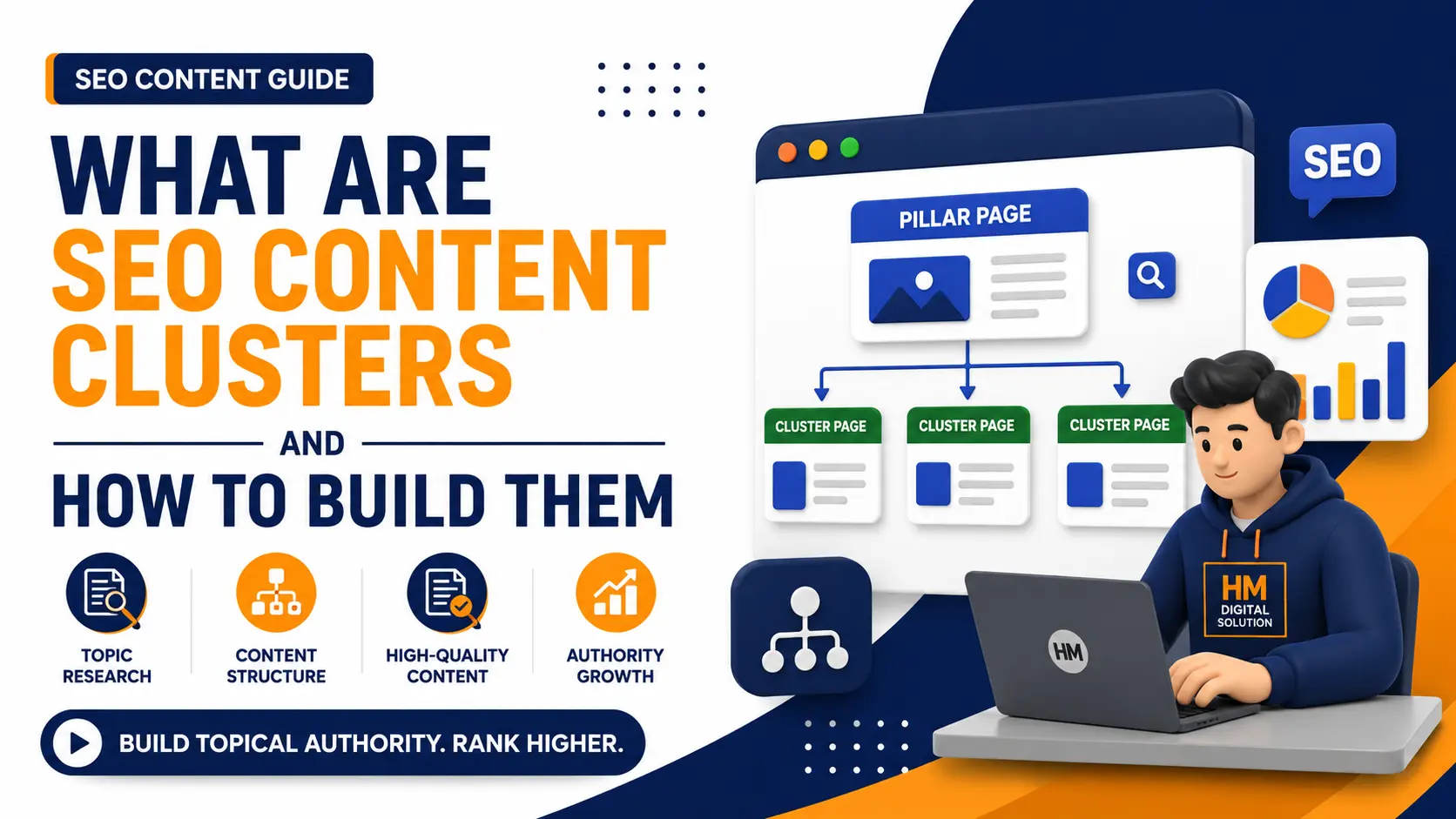
A content cluster is a group of manually written articles built around a central topic and linked together. Programmatic SEO generates pages from a template and dataset. Many strong SEO strategies use both together, content clusters for competitive topics and programmatic pages for long tail variations underneath them.
Final Thoughts
Programmatic SEO is not a shortcut, it is a system. The businesses that succeed with it treat data quality, template design, and indexation control as seriously as they would treat writing a single high value article. Get those fundamentals right, and programmatic SEO becomes one of the most efficient ways to capture long tail search traffic that traditional content simply cannot cover at the same speed.
If your website has a dataset worth turning into pages, whether that is service locations, product categories, or industry variations, our SEO Services can help you build a programmatic SEO strategy that scales without losing quality or risking your existing rankings.
Tanishka Vats
Lead Content Writer | HM Digital Solutions Results-driven content writer with over five years of experience and a background in Economics (Hons), with expertise in using data-driven storytelling and strategic brand positioning. I have experience managing live projects across Finance, B2B SaaS, Technology, and Healthcare, with content ranging from SEO-driven blogs and website copy to case studies, whitepapers, and corporate communications. Proficient in using SEO tools like Ahrefs and SEMrush, and content management systems like WordPress and Webflow. Experienced content writer with a proven track record of creating audience-centric content that drives significant results on website traffic, engagement rates, and lead conversions. Highly adaptable and effective communicator with the ability to work under deadlines.